Signs a South Florida Building Needs Concrete Restoration
How Owners and Boards Can Spot Concrete Deterioration Before It Becomes Structural
6 min read
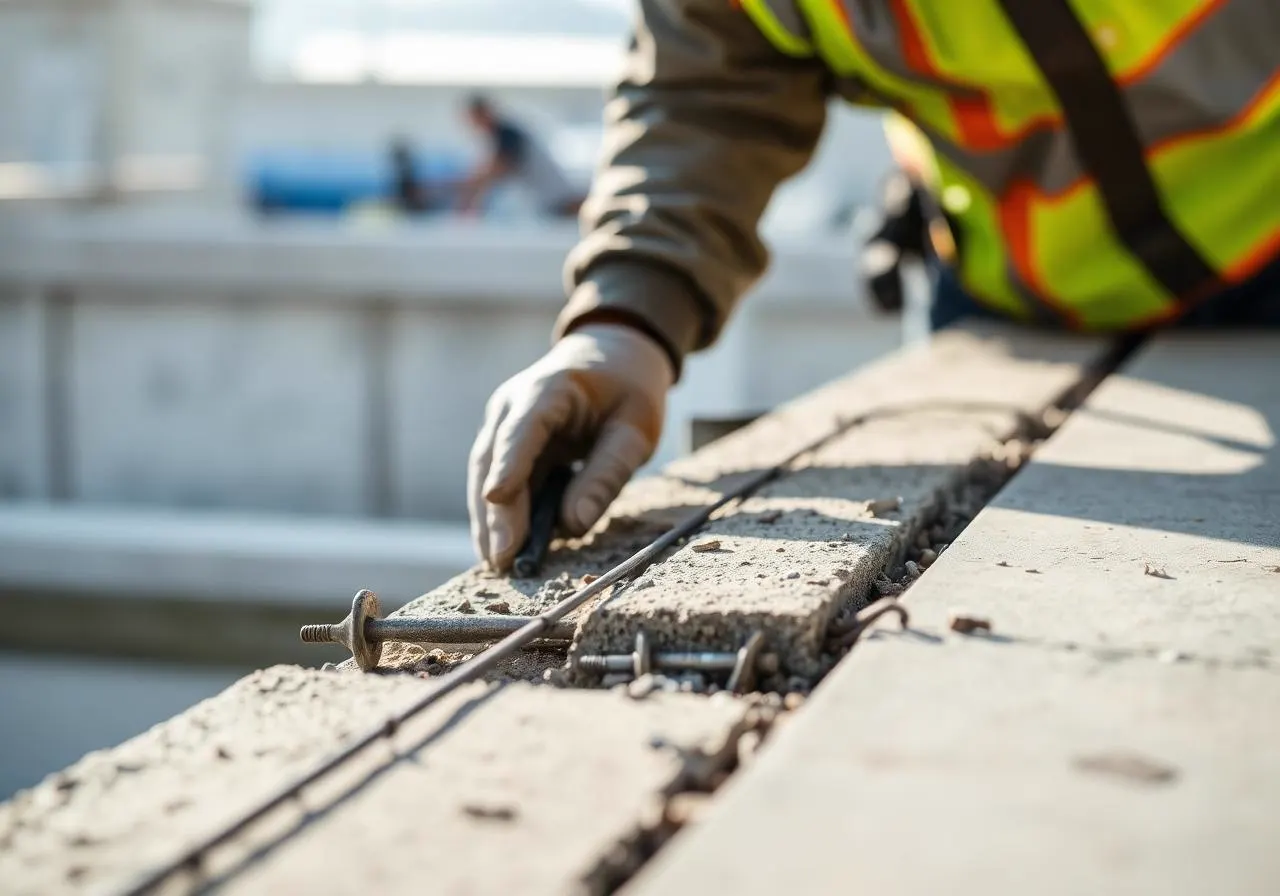
Rust stains, hollow-sounding slabs, and cracked balcony edges are early warnings that reinforced concrete is deteriorating. Here is what to look for and what to do next.
Why Concrete Deteriorates Faster in Coastal Florida
Reinforced concrete is a partnership between two materials: the concrete carries compression, and the embedded steel carries tension. That partnership depends on the concrete keeping salt, water, and oxygen away from the steel. In coastal South Florida, that protective barrier is under constant attack. Salt-laden air drifts inland for miles, wind-driven rain saturates facades, and year-round humidity keeps building envelopes damp long after a storm passes.
When chlorides reach the reinforcing steel, the steel begins to corrode. Corroding steel expands to several times its original volume, and that expansion pushes the surrounding concrete outward until it cracks, delaminates, and finally breaks away. That final stage is what most people recognize as spalling — but by then, the corrosion has usually been in progress for years.
Visible Warning Signs Worth Investigating
Rust-colored staining that bleeds from a crack, a slab edge, or the underside of a balcony is one of the most reliable early indicators. The stain is corrosion product migrating out through the concrete, which means the steel inside is already active.
Long, straight cracks that run parallel to a beam, column, or slab edge often follow the line of the reinforcing bar underneath. Random map cracking is usually a surface issue; linear cracking that follows the steel is a structural signal.
Bulging or blistered paint and coatings frequently hide delaminated concrete. So does a patch of stucco that sounds hollow when tapped. A simple sounding survey — tapping surfaces with a hammer and listening for a drum-like response — reveals delamination long before the concrete falls.
Other signs include efflorescence (white mineral deposits) around joints, ponding water on balcony and garage decks, deteriorated caulk joints, and rust stains around railing posts embedded in concrete.
What a Proper Assessment Includes
A credible concrete assessment is more than a walk-around. It should include a sounding survey of representative slabs, balconies, columns, and beams; documentation and mapping of every delaminated area; photographs tied to locations; and a written summary of findings. On larger or more advanced cases, a structural engineer may add material testing to measure chloride content or carbonation depth.
The output should be a repair scope you can actually price and bid: quantities of surface repair, full-depth repair, steel replacement, and coating work — not a vague recommendation to 'repair the concrete.'
How Concrete Restoration Work Is Performed
Repairs begin by removing all unsound concrete back to solid material, exposing the corroded steel completely around its circumference so the corrosion can be cleaned or the bar replaced. Skipping this step is the single most common cause of repairs that fail within a few years — patching over active corrosion simply relocates the problem to the edge of the patch.
Cleaned or replaced steel is coated, and the cavity is filled with a repair mortar or concrete selected for the exposure and the depth of the repair. Cracks that are structural but stable are often restored with epoxy injection. Once repairs cure, surfaces are prepared and protected — typically with a coating or waterproofing system that slows the next cycle of chloride intrusion.
Why Timing Matters for Boards and Owners
Concrete deterioration is not linear. A small area of delamination is inexpensive to repair; the same area left alone for several years can involve full-depth removal, shoring, and structural reinforcement. Addressing it early also gives boards time to plan funding rather than confronting an emergency assessment.
For condominium buildings approaching milestone inspection or 40-year recertification, an early assessment is even more valuable. Knowing the real scope in advance allows the association to budget, phase the work, and avoid compressed timelines.
Related Restoration Services
Service Areas
We provide building restoration in Fort Lauderdale, Miami, Boca Raton, West Palm Beach and communities across South Florida.